
The Scarcity of Knowledge — A Human Story
By Eugene Beetge — Founder, Eckho.ai

For most of human history, if you needed to know something — you paid for it.
Not because knowledge was evil or gatekept on purpose. Just because it was scarce.
Your doctor spent years learning what you didn't. Your lawyer understood a system you couldn't navigate. Your accountant knew rules you'd never read. You paid them because the gap between what they knew and what you knew was real — and crossing it took time you didn't have.
That was the deal. Knowledge = power = income.
Then technology started chipping away at it.
The printing press. Libraries. Radio. TV. The internet. Email. YouTube. Wikipedia. Podcasts.
Every wave made more knowledge available to more people. Topics that used to require a university degree are now a YouTube video away. Medical symptoms? Google it. Legal questions? There's a subreddit for that. Tax advice? There's a channel for that too.
So what's left that makes expertise valuable?
Mostly time. You pay someone today not because they know something you can't access — but because you don't have the hours to get there yourself.
I Lived on That Gap for 40 Years

I'm a GenX software engineer and solutions architect. In the industry since the 80s.
The knowledge gap was my business model too.
Clients needed systems built, designed, and architected. They couldn't do it themselves — they didn't know the languages, the patterns, the thinking behind it. We did. That gap paid our salaries, our consulting fees, our retainers.
And then AI arrived.
Now the gap isn't just smaller. For many things, it's gone.
AI doesn't just retrieve knowledge. It reasons with it. Explains it. Applies it to your specific situation. Faster and often better than the professional you'd have called.
I'll say something most of my tech colleagues won't admit openly:
AI develops better than any developer I have ever worked with.
I've managed development teams for decades. AI is faster, more consistent, and doesn't need a sprint retrospective. It doesn't replace the designer or the engineer — the thinking, the architecture, the decisions are still human. But the execution? AI does it. Under instruction. On demand.
I see developers daily who still won't admit it. Who still call it "just a tool."
It already replaced the developer. We just haven't updated the job titles yet.
AI was built by technologists, for technologists. But the public is benefiting — and catching up faster than anyone expected.
I say this as someone who trusts AI deeply: I wish more professionals would use it for their clients. Because if they don't, the end user will just go directly to AI themselves.
The Uncomfortable Question
Which brings me to something nobody wants to talk about.
What happens to the next generation?
Young people today can ask any question and get a brilliant answer in seconds. That's an incredible tool. But learning has always had a forcing function — the struggle of not knowing, the effort to find out, the memory built through that process.
If that friction disappears entirely, what replaces it?
I don't have a clean answer. Nobody does yet.
So What Remains Scarce?
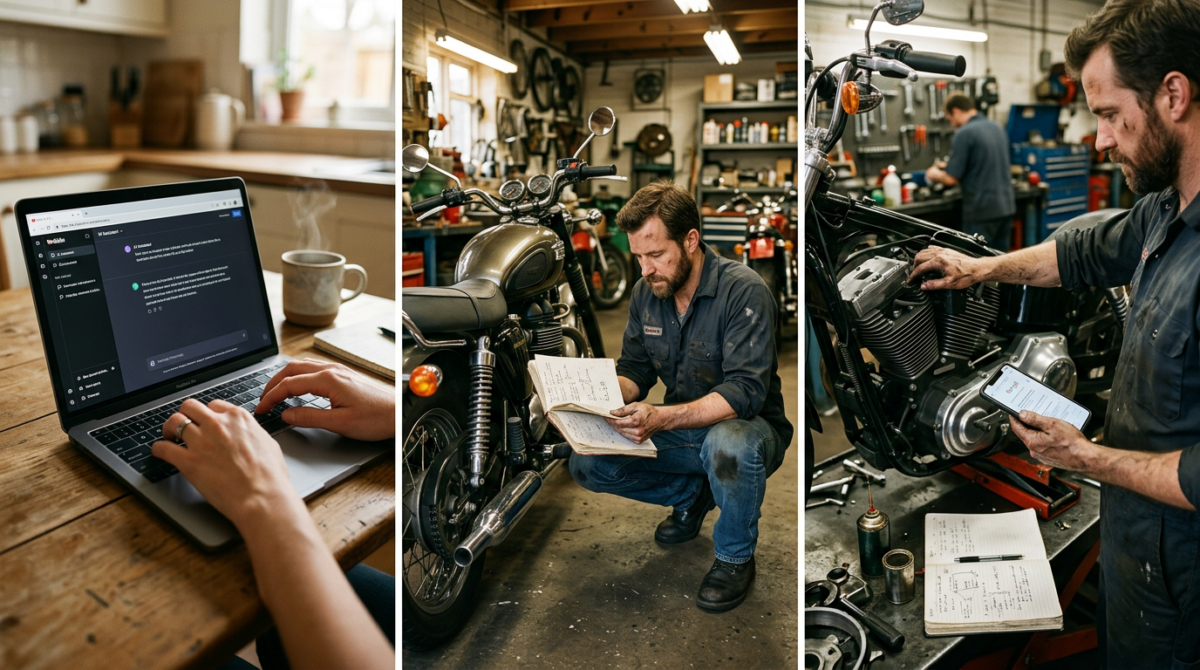
Not information. Not even expertise in the traditional sense.
What remains scarce is your knowledge.
Your lived experience. Your professional insight built over decades. Your personal world view. Your institutional memory as a business. The things inside your head that AI doesn't have access to — unless you give it.
Knowledge is no longer scarce. But the ability to organise, own, and deploy your personal and professional knowledge — that's still a very human problem.
That's exactly why I built Eckho.
Not to replace knowledge. To help you own yours.
Follow along — the story continues.
Eugene Beetge is a software engineer, solutions architect, and founder of Eckho.ai.